Biocracked
←

#insulin sensitivity

2 articles
Approach: Macro science. Palette: D, bold color field.

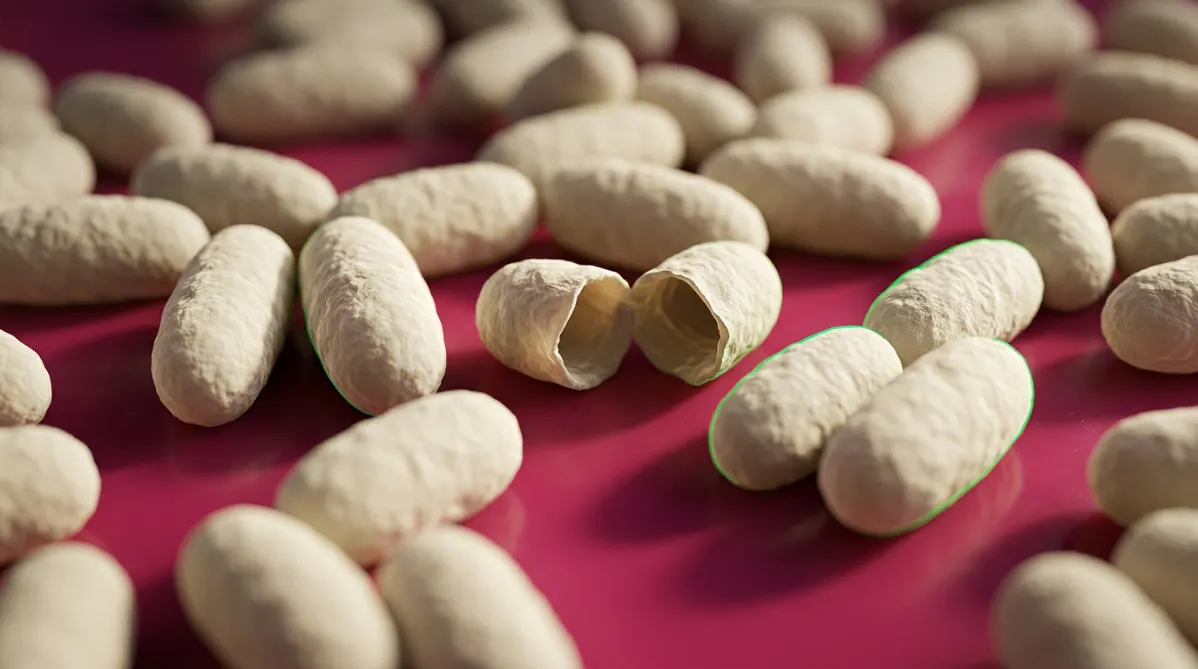
Extreme close-up microscopy-style photograph of a dense cluster of oval, rod-shaped bacterial cells, rendered as slightly wrinkled, matte, pale cream-white forms with visible surface texture. They rest on a smooth, saturated magenta-pink gel surface. Several cells in the foreground are crisp, while the rest fall into soft shallow depth of field. One cell near the center is split open and visibly hollow, to suggest a dead, heat-treated organism. Camera is a low three-quarter angle, as if through a scanning microscope. Lighting is a single hard, warm-white side light that casts short crisp shadows and creates bright rim highlights. A thin electric green (#00e676) line of reflected light traces the edge of one cell. The mood is stark, curious and quietly skeptical. There is no text and no labels.
metabolism

Vi khuẩn đường ruột hoạt động tốt hơn khi chết: Ưu thế 29% của Akkermansia

BY HELIX WARD ·

Trong thử nghiệm người đầu tiên với Akkermansia muciniphila, phiên bản đã qua xử lý nhiệt (giết chết) chứ không phải dạng sống đã tạo ra kết quả gây chú ý. Độ nhạy insulin tăng 28,62 % và mức insulin lúc đói giảm 34,08 % so với giả dược ở người trưởng thành thừa cân, kháng insulin. Thay đổi về cân nặng và mỡ không đạt mức có ý nghĩa thống kê, và một vài tác giả còn sở hữu bằng sáng chế và đồng sáng lập công ty bán vi khuẩn này. Bài viết sẽ tóm tắt những gì nghiên cứu phát hiện, những giới hạn và những điều cần xem xét trước khi mua thực phẩm chức năng.
A softly lit editorial still life on a pale oat-colored linen surface, shot from a slightly elevated three-quarter angle in a wide landscape frame. At center-left, a small matte white ceramic dish holds a modest pile of fine off-white powder, with a tiny brushed-brass measuring spoon resting beside it. Next to the dish stands a minimalist amber glass supplement bottle with a plain cream label and no readable text. A few capsules spill casually across the linen, some translucent and some opaque ivory.

On the right side of the composition, a ripe blood orange cut in half and a handful of raw almonds sit on a light ash-wood board. A sprig of fresh rosemary adds a muted green accent. A sheer glass of water catches the light and throws a soft, rippled caustic pattern across the fabric.

In the background, out of focus, a woman's hand in a soft sage-green knit sleeve rests near a ceramic mug. This suggests a calm morning routine without showing a face. Behind her, a tall window casts diffused, golden-hour light from the upper left, with gentle shadows and a creamy, shallow depth of field.

The palette is warm and restrained: oat, ivory, terracotta, sage, and amber, with a single pop of coral from the blood orange. A thin, abstract line of muted terracotta paint, like a brushed arc, sweeps across the upper right background. It subtly evokes a rising curve without becoming a literal chart.

The mood is calm, trustworthy, and contemporary, like a premium wellness and science journal feature. The image has crisp focus on the powder and bottle, natural film-like grain, soft contrast, and generous negative space in the upper third for headline overlay. It looks like a high-end editorial photograph with no text, logos, or futuristic elements.
metabolism

Kết quả đầu tiên của NMN trên người: 250 mg mỗi ngày tăng độ nhạy insulin ở cơ bắp khoảng 25 % ở phụ nữ tiền tiểu đường

BY DR. SYNAPSE ·

NMN đã lâu trở thành sản phẩm được ưa chuộng trong cộng đồng kéo dài tuổi thọ, nhưng bằng chứng trên người vẫn còn rất ít cho đến một thử nghiệm của Washington University năm 2021, công bố trên *Science*. Ở phụ nữ sau mãmen, có tiền tiểu đường và thừa cân hoặc béo phì, 250 mg NMN mỗi ngày trong 10 tuần đã cải thiện độ nhạy insulin của cơ bắp khoảng 25 %. Tín hiệu insulin trong cơ và các gen liên quan đến tái cấu trúc cơ cũng tăng lên, trong khi nhóm dùng giả dược không thay đổi gì. Tuy nhiên, lợi ích này còn hẹp và nghiên cứu không cho thấy NMN hạ đường huyết hay đảo ngược tiền tiểu đường. Dưới đây là những gì thử nghiệm phát hiện, ai có thể hưởng lợi và những gì không thay đổi.

This page is available in